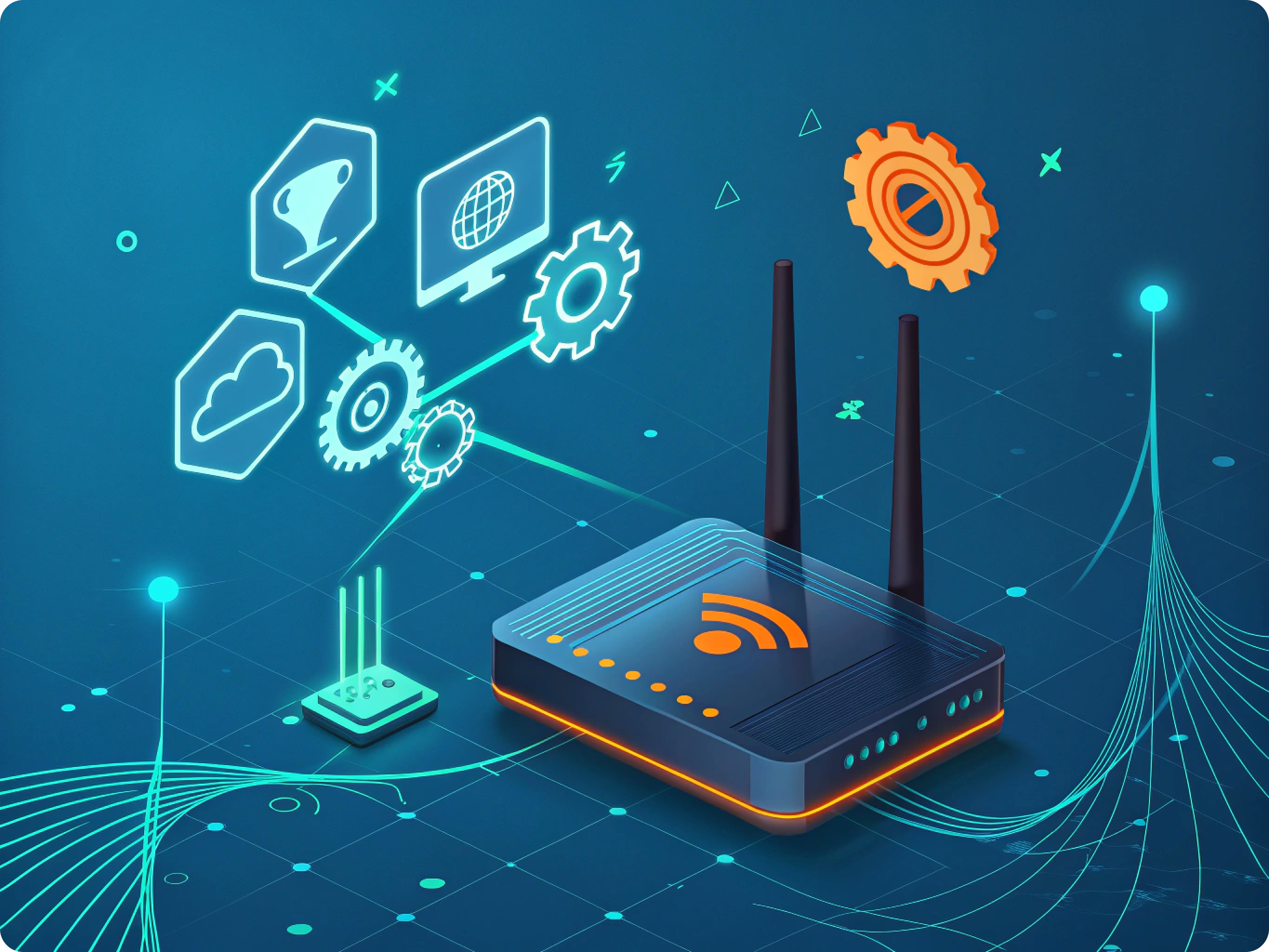


A proxy server is an intermediary computer that connects a user’s device to online resources. An inexperienced user may assume that a direct connection is always faster and more reliable, but that is not necessarily the case. Data transfer depends on the speed of both the user-to-proxy connection and the proxy-to-destination connection. When both links are fast, network latency may be lower than with a less efficient direct route.
How Can a Proxy Improve Connection Speed?
A proxy may help improve performance when the server is located close to the user. Proxy servers often have high-speed internet connections and substantially more computing power than a typical PC. They can also cache data and deliver it directly to the user without requesting it again from the remote source.
How Can You Hide Your Real IP Address?
Anonymous proxies can be used for this purpose. They act as intermediaries between the user and the destination, replacing the user’s connection details with their own. The level of privacy depends on the configuration, allowing you to balance anonymity and connection speed. A proxy chain consisting of several sequential nodes can provide greater privacy.
Why Hide Your IP Address?
- Access blocked websites.
- Bypass IP bans on forums, chats, and online services.
- Bypass regional restrictions.
- Access resources blocked at work.
What Types of Proxies Are Available?
- HTTP proxies are the most common type and can be used in browsers without additional software.
- SOCKS proxies are more versatile and secure but require additional configuration.
- CGI proxies operate through web interfaces, such as web proxy sites.
How Can You Check a Proxy?
Proxy checkers analyze the connection to identify the protocol and the server’s anonymity level. For example:
- SOCKS commonly uses ports 1080 and 1081.
- HTTP commonly uses ports 3128, 80, 8080, and 81.
- HTTPS can be identified only with specialized checkers.
Paid or Free?
Advantages of Free Proxies:
- No payment is required.
- You can change your IP address at no cost.
- Some offer good speeds.
Disadvantages:
- Finding a reliable server takes time.
- They are often short-lived: good proxies may shut down quickly or become paid services.
- Your PC may be used for undisclosed purposes.
Advantages of Paid Proxies:
- More consistent connection quality.
- A choice of providers, with the option to switch services.
- A higher level of security.
Disadvantages:
- You may not be able to switch among servers at no additional cost.
- Creating proxy chains may require additional spending.
Additional Proxy Types
When choosing a proxy, consider the characteristics of each type:
- Anonymous proxies hide your IP address and provide a high level of privacy.
- Private proxies are used by a single customer, helping provide stable performance.
- HTTP proxies are suitable for browser-based web use.
- SOCKS5 proxies support multiple traffic types and provide stronger security.
- IPv4 proxies provide stable connections.
- Bulk proxies are purchased in large quantities for high-volume use.
- Mobile proxies route traffic through mobile networks and rotate IP addresses regularly.
Proxies can improve anonymity and security while providing access to blocked resources and allowing connections to be configured for specific use cases.
-

-

-
 Link copied!